
Why 60% of First-Time Drivers Fail Their Test — And How Driving School Helps You Pass
Students who can confidently control a vehicle still fail their road test on the first attempt. They know how to steer, brake, park, and signal—yet they walk away without a license.
The reason is simple: most failures have nothing to do with basic driving ability.
They happen because students misunderstand what driving examiners are actually evaluating.
A road test is not about proving you can drive. It’s about demonstrating that you can drive safely, consistently, and calmly under pressure. Once you understand that difference, your entire approach to preparation changes.
The First Five Minutes Matter More Than You Think
Examiners begin evaluating you before the car even moves. How you adjust your seat, set your mirrors, fasten your seatbelt, and prepare to start tells them a lot about your driving habits.
These small actions reveal whether safety is automatic or forced. A rushed start, forgotten blind-spot check, or nervous fumbling creates doubt early—and once that doubt is there, every move is judged more closely.
When you start calmly and methodically, the rest of the test becomes easier.
The Mistakes That Actually Cause Failure
Not all mistakes carry the same weight. Minor errors may be recorded, but observation failures often result in an immediate fail.
The most common reasons first-time drivers fail include:
- Failing to check blind spots before lane changes
- Missing pedestrians at crosswalks
- Rolling through stop signs
- Poor judgment at intersections
These are not vehicle control problems. They are awareness and decision-making issues.
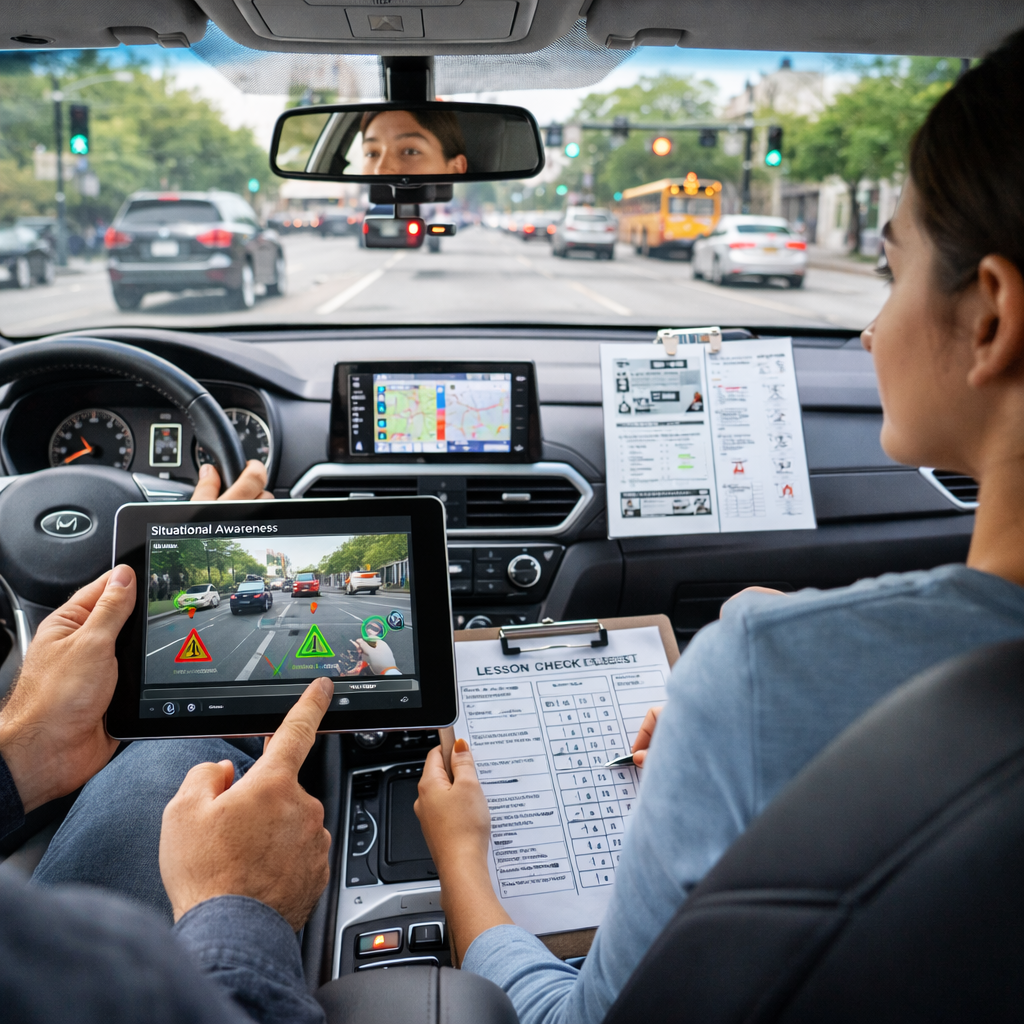
That’s why our instruction focuses heavily on defensive scanning, hazard recognition, and anticipation. Steering and braking are important, but they don’t matter if you fail to notice what’s happening around you.
A road test measures awareness just as much as skill.
Speed Is About Judgment, Not Just Following Limits
Many drivers believe staying exactly at the speed limit guarantees success. In reality, examiners are evaluating judgment, not just rule-following.
Driving at the posted speed in poor visibility, near pedestrians, or through tight residential areas can show poor decision-making—even if it’s technically legal. On the other hand, driving far below the limit on a clear road can also signal uncertainty and lack of confidence.
Why Nerves Cause Good Drivers to Fail
Test anxiety is one of the biggest reasons capable drivers fail. Under stress, the brain falls back on habits. If mirror checks, signals, and full stops aren’t automatic, they disappear when pressure increases.
This is why last-minute cramming rarely yields effective results.
We focus on habit-building, not shortcuts. When safe driving behaviours become second nature, nerves lose their power. Students don’t have to “remember” what to do—it simply happens.
Confidence on test day comes from repetition, not luck.
What Actually Works: Driving Instructor Approach
At Driving school, training prioritises what matters most on a road test:
- Consistent observation and blind-spot discipline
- Strong intersection judgment
- Speed awareness and hazard-based decision-making
- Familiarity with real test routes and environments
In the final week before the test, students practice under realistic conditions: no distractions, no music, and a full examiner mindset. This prepares them not just to drive—but to be evaluated.
The Bottom Line
Most first-time failures happen because students prepare for the wrong test. They practice driving, but don’t practice being assessed.
A road test measures whether safe driving habits are real, consistent, and automatic. Examiners can easily tell the difference between a nervous but competent driver and someone masking weak habits.




0 Comments