
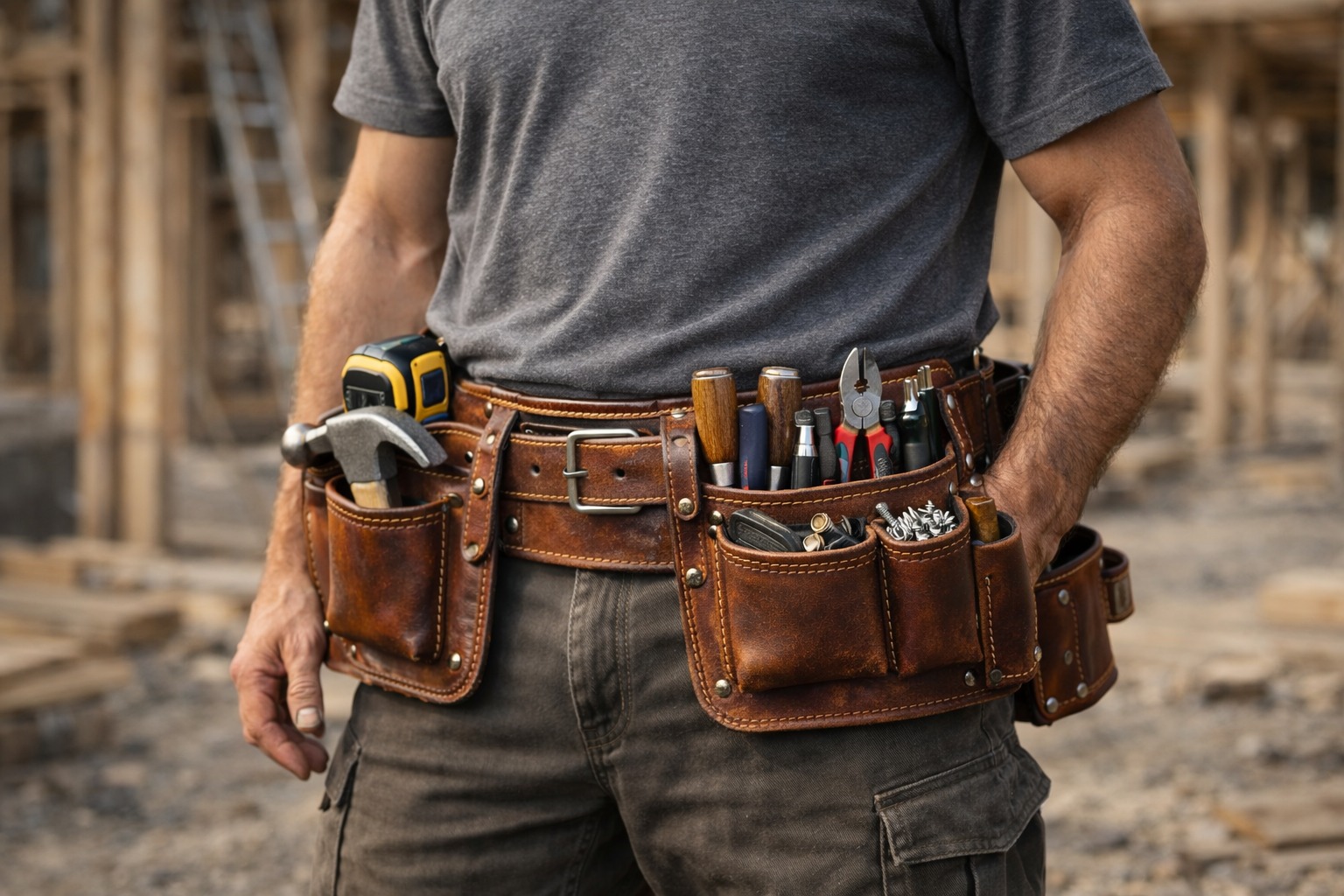
How to Choose the Right Leather Tool Belt for Your Trade (Carpenter, Electrician, DIY)
Choosing the right leather tool belt is one of the most important decisions you can make as a tradesperson or DIY builder. A tool belt isn’t just storage — it’s part of your workflow, your efficiency, and your professional identity. The wrong belt slows you down; the right one helps you work faster, safer, and more comfortably.
Why This Guide Matters
Carpenters, electricians, and DIY users all have different needs. Each trade requires a specific belt layout, pocket style, weight distribution, and material quality.
This guide will help you understand:
- The differences between trade-specific leather tool belts
- What features actually matter on the job
- How to select the correct pouch layout and weight balance
- Why premium craftsmanship — such as that used in Bolt Belts — impacts comfort and performance
- Maintenance and sizing tips to get the most from your tool belt
By the end, you’ll be equipped to choose a leather tool belt that supports your work for years.
Why Leather Tool Belts Are Still the Professional Standard
Synthetic tool belts come and go, but premium leather remains the go-to choice for professionals. Here’s why:
1. Long-Term Durability
Full-grain leather is incredibly tough. Rather than break down, it becomes more flexible and more comfortable with time. A well-made belt can last 5–15 years — far longer than nylon alternatives.
2. Superior Weight Support
Heavy tools easily distort synthetic belts. Leather holds its shape and distributes weight evenly, preventing sagging and discomfort.
3. A Custom Fit (Over Time)
Leather molds to your body as you wear it. After a break-in period, it becomes your belt — personalized to your working style and movements.
4. Better Tool Security
Leather pouches stay open, upright, and structured, allowing you to grab and replace tools efficiently throughout the day.
5. A Professional Look
Tradespeople take pride in their gear. A premium leather belt communicates craftsmanship, reliability, and professionalism.
Understanding Your Trade Before Choosing a Belt
Before choosing a leather tool belt, ask yourself:
What tools do I carry every day?
A carpenter’s essentials are different from an electrician’s or a DIY user’s.
How much weight am I comfortable carrying?
Heavier belts last longer, but require stronger support.
Do I prefer bulk storage or precise organization?
Some trades require large pouches; others need small compartments.
Do I work in tight spaces?
Your working environment influences belt size and style.
With that in mind, let’s break down what each type of user needs.
Best Leather Tool Belts for Carpenters
Carpenters rely on a variety of tools, large fasteners, and bulky accessories. Their belts must withstand rough jobsite conditions while providing easy access to essential items.
Key Features Carpenters Should Look For
1. Deep, Reinforced Main Pouches
Carpenters frequently carry:
- Framing nails
- Finish nails
- Chalk line
- Speed square
- Utility knife
Deep pockets prevent spills when climbing ladders or bending.
2. Hammer Loop or Hammer Sleeve
A hammer is used constantly. The loop must be:
- On the dominant-hand side
- Reinforced for weight
- Placed for quick access
3. Tape Measure Holder
One-handed tape access is crucial. A leather clip or reinforced pouch prevents slipping.
4. Balanced Left–Right Setup
A standard carpenter’s layout is:
- Right side: tools
- Left side: fasteners
This balance reduces fatigue and improves workflow.
5. Heavy-Duty Full-Grain Leather
Carpentry demands durability. Look for belts that match the rugged craftsmanship associated with premium brands like Bolt Belts.
Recommended Carpenter Belt Style
✔ Large framer belt
✔ Reinforced stitching
✔ Multiple spacious pouches
✔ Optional suspenders for heavy loads
Best Leather Tool Belts for Electricians
Electricians work with many small, delicate tools. Organization is the priority — not bulk.
Key Features Electricians Should Look For
1. Multiple Small Compartments
To safely store:
- Wire strippers
- Screwdrivers
- Pliers
- Voltage testers
- Nut drivers
- Wire connectors
Having specific pockets for each prevents damage and speeds up work.
2. Small Parts Pockets
Wire nuts, screws, and connectors require secure, separated storage.
3. Lightweight Structure
Electricians often work in tight spaces such as attics, crawlspaces, and behind fixtures. Slimmer belts provide better mobility.
4. Secure Closures
Buttoned or snapped pockets prevent loss of small components.
5. Optional Padding or Suspenders
Carrying lots of small tools increases weight. Comfort matters on longer jobs.
Recommended Electrician Belt Style
✔ Slim profile
✔ Many subdivisions
✔ Balanced access
✔ Secure pockets for delicate tools
Best Leather Tool Belts for DIY Homeowners
DIY users may not require professional-grade setups, but they still need efficiency and comfort.
Key Features for DIY Belts
1. Simple, Versatile Layout
DIY users typically need storage for:
- Hammer
- Screwdrivers
- Tape measure
- Utility knife
- Drill bits
- Screws/fasteners
A 5–7 pocket belt works best.
2. Lightweight Leather
Comfort is more important than maximum durability.
3. Adjustable Fit
DIY belts are often shared among household members, so a wide size range is ideal.
4. Limited Bulk
DIY projects are shorter — no need for oversized pouches.
Recommended DIY Belt Style
✔ Minimalist, universal setup
✔ Mid-weight leather
✔ One or two main pouches
✔ Tape holder + hammer loop
Brands like Bolt Belts offer balanced designs that work for both professionals and homeowners.
Full-Grain vs Top-Grain vs Split Leather: Which Should You Choose?
Understanding leather type is essential for making a smart purchase.
Full-Grain Leather
- Thick, durable, highest quality
- Longest lifespan
- Molds perfectly to your body
- Best for professionals
Top-Grain Leather
- Slightly thinner, lighter
- Great balance of durability + flexibility
- Ideal for electricians or DIYers
Split Leather (Suede)
- Soft and lightweight
- Most affordable
- Shorter lifespan
Which Should You Choose?
- Carpenters: full-grain
- Electricians: top-grain or full-grain
- DIY users: top-grain or split leather
Premium tool belt makers, including Bolt Belts, often choose full-grain leather for professional-grade products.
Suspenders vs Belt-Only: Which Is Better?
Suspenders are becoming more popular, especially among pros who carry heavier tools.
Choose Belt-Only If You:
- Prefer minimal gear
- Carry a light-to-moderate load
- Work in tight spaces
Choose Suspenders If You:
- Carry heavy tools frequently
- Experience hip or lower back pain
- Work long shifts
- Need better weight distribution
Suspenders shift weight from the hips to the shoulders, improving posture and comfort.
How to Size a Leather Tool Belt Correctly
Improper sizing leads to discomfort, imbalance, and inefficient movement. Follow these steps:
1. Measure at the Waist or Hips
Wherever you wear your belt — measure there.
2. Choose the Middle Hole Range
Leather stretches slightly, so a mid-range fit is ideal.
3. Select a Contoured Belt
Curved belts prevent digging into the hips and help maintain posture.
4. Consider Layering
If you wear thick clothing in winter, size accordingly.
Organizing Your Tool Belt Like a Professional
A well-organized belt saves time, reduces strain, and prevents mistakes.
General Layout Strategy
Right Side:
- Hammer
- Knife
- Chisels
- Tape measure
Left Side:
- Nails
- Fasteners
- Screws
- Wire connectors
This dominant-hand strategy is used by nearly every skilled tradesperson.
Why This Layout Works
- Reduces unnecessary movement
- Improves muscle memory
- Keeps weight evenly distributed
- Minimizes tool collisions
Maintenance Tips to Extend the Life of Your Leather Tool Belt
Leather needs care to last.
1. Regular Cleaning
Wipe with a damp cloth. Avoid soaking.
2. Conditioning
Apply leather conditioner every 3–6 months to prevent cracks.
3. Avoid Heat
Do not store in direct sunlight or hot vehicles.
4. Hang It Up
When not in use, hang the belt to maintain shape and airflow.
Brands like Bolt Belts design tool belts to last years, but proper maintenance significantly extends their lifespan.
FAQs
1. What type of leather is best for tool belts?
Full-grain leather — it’s the strongest and lasts the longest.
2. How do I choose the right tool belt for my trade?
Match the belt to your daily tools: carpenters need large pouches, electricians need small compartments, DIY users need light setups.
3. Do I need suspenders with my leather tool belt?
Use suspenders if your tool load is heavy or you feel lower-back pressure.
4. How should a leather tool belt fit?
Snug, secure, and comfortable — tight enough to stay in place, but not restricting.
5. How do I break in a new leather tool belt?
Wear it regularly; the leather softens and molds naturally with use.
6. How do I maintain a leather tool belt?
Wipe clean, condition occasionally, and keep it away from heat and moisture.
Conclusion
Choosing the right leather tool belt is a decision that affects your efficiency, comfort, and performance on the job. Carpenters need deep, reinforced pouches and durable full-grain leather. Electricians benefit from multi-pocket, lightweight designs. DIY users thrive with simple, versatile setups.
Understanding your trade, choosing the correct leather type, selecting the right layout, and maintaining your belt properly will ensure your tool belt becomes a long-term asset.
Premium craftsmanship — as seen in brands like Bolt Belts — matters because it turns a simple tool belt into a reliable partner you trust on every project.
A well-chosen belt supports your craft, your workflow, and your safety. Make the right choice, and it will serve you for years.





0 Comments