
Passport Application in Pakistan: A Complete Guide for Applicants
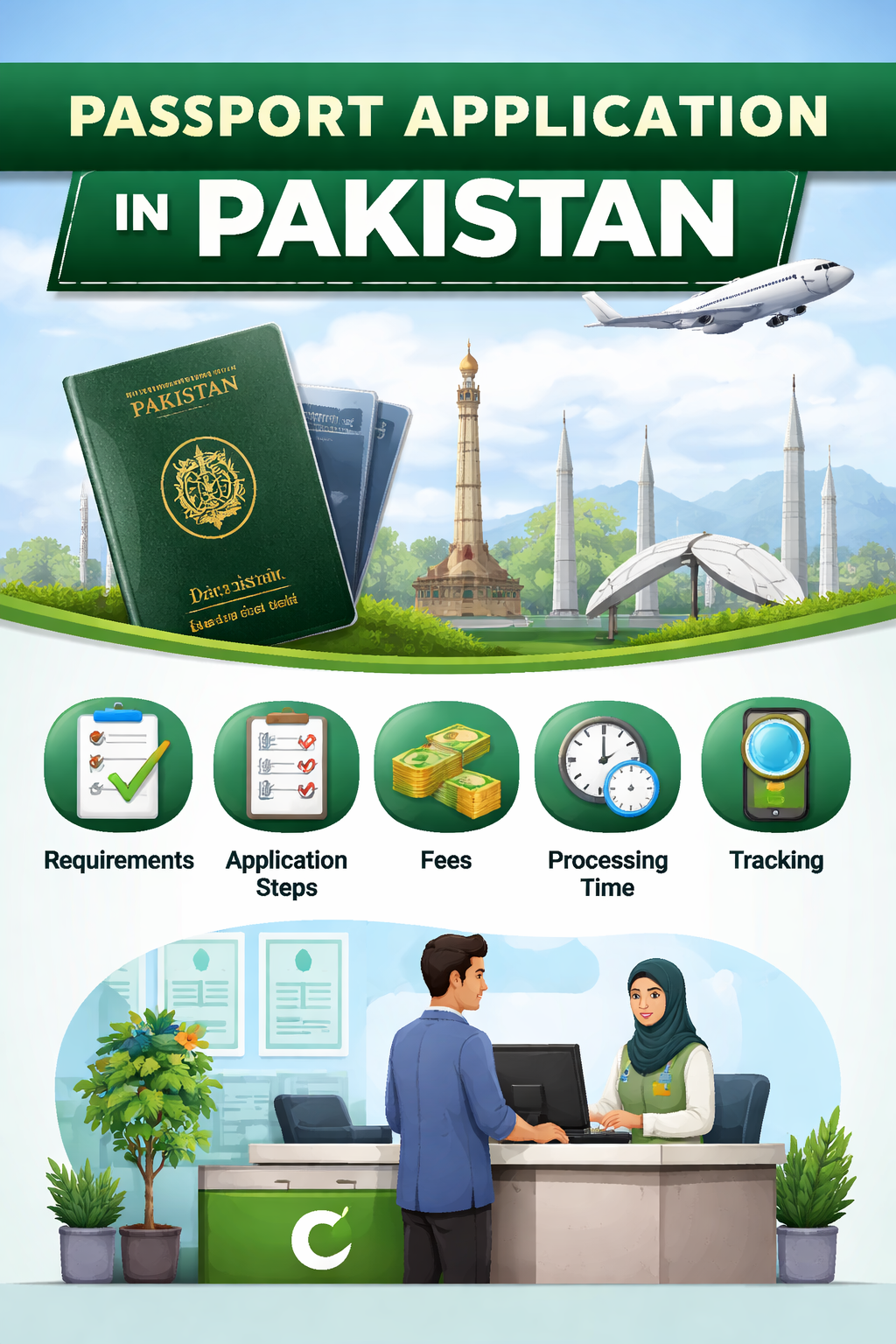
This comprehensive guide explains everything you need to know about the passport application process in Pakistan, including requirements, step-by-step procedures, fees, processing time, and tracking methods.
Importance of a Passport
A passport is not only a travel document but also an official proof of identity and nationality. It allows Pakistani citizens to enter foreign countries legally and return home without complications. Many international processes, such as visa applications, job offers abroad, and university admissions, require a valid passport. Applying on time and keeping it updated is crucial for smooth international travel planning.
Types of Passports Issued in Pakistan
Pakistan issues ordinary passports to citizens for general travel purposes. These passports are available with different options based on travel needs. Applicants can choose from various page counts, such as 36, 72, or 100 pages, which are useful for frequent travelers who need multiple visas and entry stamps.
Passports are also issued with different validity periods, usually 5 or 10 years. Selecting the right option during the application stage helps avoid early renewal and additional costs.
Requirements for Passport Application
Before visiting a passport office, applicants should ensure they have all the required documents. The most important requirement is a valid Computerized National Identity Card (CNIC) issued by NADRA. For minors, a B-Form or Child Registration Certificate (CRC) is mandatory along with parents’ CNICs.
Applicants must ensure that all personal details such as name, date of birth, and address match official records. Any mismatch can lead to delays or additional verification. Carrying original documents along with copies is recommended for a smooth application process.
Step-by-Step Passport Application Process
The passport application process in Pakistan follows a clear sequence of steps. Applicants must visit a designated passport office and obtain a token. After token issuance, data entry is completed by officials, followed by biometric verification, which includes fingerprints and photographs.
Once biometric verification is completed, documents are reviewed for accuracy and authenticity. After successful verification, the application is officially submitted into the system. Applicants receive a receipt with a tracking number, which is essential for checking the application status later.
Passport Fees and Processing Options
Passport fees in Pakistan vary depending on the passport’s validity, number of pages, and processing speed. Applicants can choose between normal and urgent processing options. Normal processing takes longer but is more affordable, while urgent processing is faster with a higher fee.
It is important to check the latest fee structure before applying, as fees may change periodically. Paying the correct fee ensures that the application is processed without delays or complications.
Passport Processing Time
Processing time depends on the selected service option. Normal passport applications usually take several weeks, while urgent applications are processed faster. However, processing times may vary due to workload, verification requirements, or public holidays.
Applicants planning international travel are advised to apply well in advance to avoid last-minute stress. Early application allows sufficient time to resolve any issues that may arise during processing.
Passport Tracking in Pakistan
One of the most convenient features of the Pakistani passport system is online tracking. After submission, applicants can use their tracking number to check the current status of their passport. Tracking updates include stages such as verification, printing, and dispatch.
Regularly checking the status helps applicants stay informed and plan their travel accordingly. It also reduces the need to visit passport offices repeatedly for updates.
Common Mistakes to Avoid
Many applicants face delays due to avoidable mistakes. Providing incorrect information, submitting incomplete documents, or selecting the wrong passport category can slow down the process. Applicants should carefully review all details before submission and follow official guidelines closely.
Another common mistake is applying too late when travel plans are already finalized. Applying early ensures peace of mind and avoids the need for urgent processing.
Benefits of Understanding the Passport Application Process
Having a clear understanding of the Pakistani passport application process helps applicants save time, reduce stress, and avoid unnecessary expenses. It also ensures compliance with official requirements and minimizes the risk of rejection or delay.
A well-prepared application reflects accurate information and proper documentation, making the overall experience smooth and hassle-free.
Conclusion
The passport application process in Pakistan is well-organized and efficient when applicants follow the correct steps and guidelines. From preparing documents and completing biometric verification to paying the correct fees and tracking application status, each stage plays a vital role in timely passport issuance.
By following this complete guide, applicants can confidently apply for their passports, avoid common mistakes, and ensure smooth preparation for international travel. A valid passport opens doors to global opportunities, making it an essential document for every Pakistani citizen planning to travel abroad.






0 Comments