
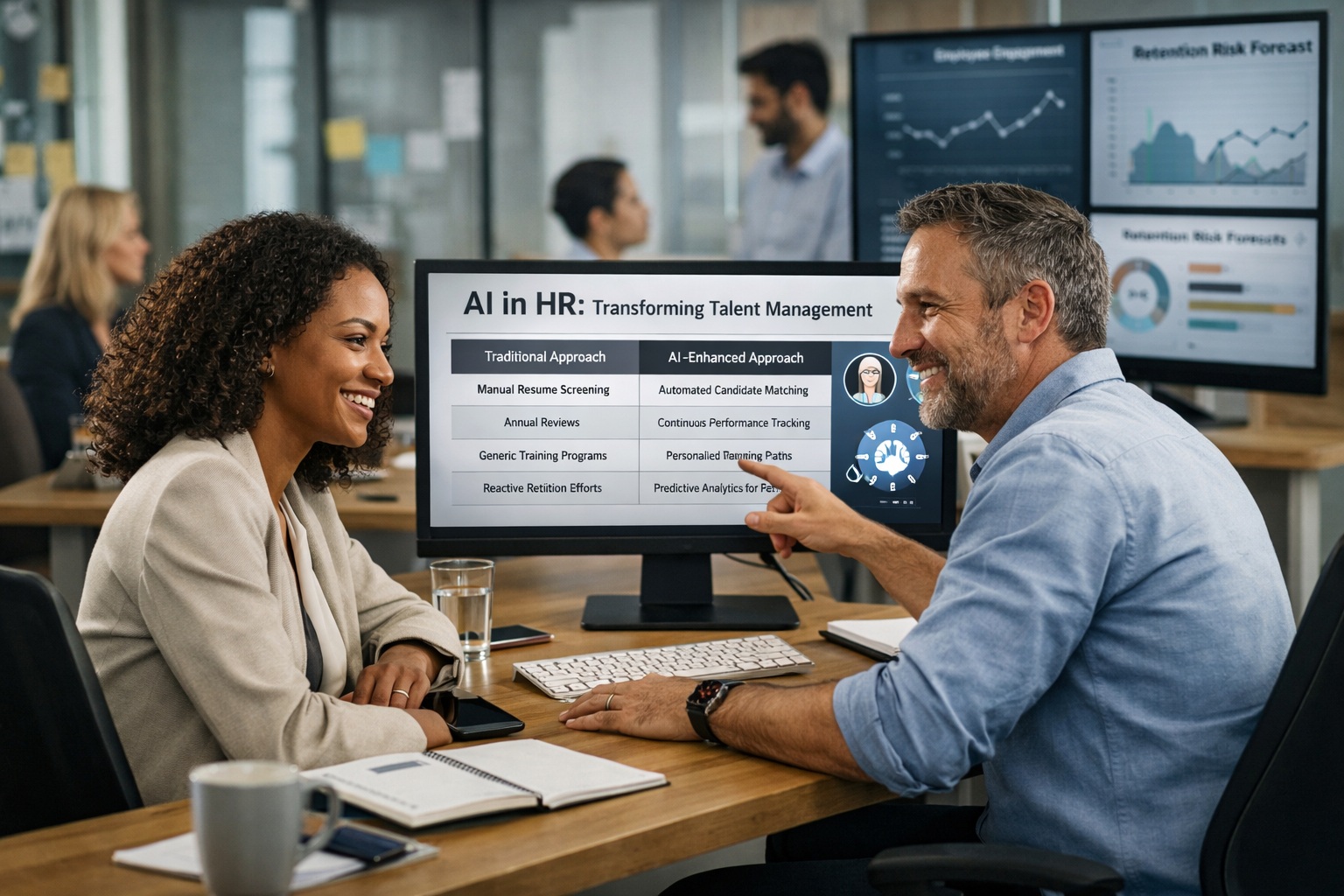
How Is AI Implementation in HR Transforming Talent Management?
If you’ve worked in human resources for even a short time, you’ve probably noticed how quickly the game is changing. The old days of sorting through piles of resumes, scheduling endless interviews, and manually tracking employee growth are fading fast. Today, technology especially artificial intelligence,is shaking up how HR professionals manage people and performance. The shift isn’t just about automation; it’s about smarter, more human-centered decisions. And right at the center of this change is AI in HR.
From Paperwork to People Work: A Smarter HR World
Think about how much time HR teams used to spend buried under administrative tasks, logging attendance, handling onboarding paperwork, and screening applicants. Those repetitive tasks used to consume hours every week. Now, AI tools can handle much of that grunt work, allowing HR professionals to focus on what really matters: understanding people.
AI-driven systems can read resumes in seconds, identify skill matches, and even predict how well a candidate might fit into a company’s culture. This doesn’t just make hiring faster, it makes it more accurate. When algorithms are properly designed, they can reduce bias and highlight talent that might otherwise be overlooked. As a result, HR becomes less about processing and more about people.
And it doesn’t stop after hiring. AI also assists in keeping employees engaged. With the help of smart analytics, companies can spot trends like decreasing morale, high workload stress, or skill gaps, sometimes before employees even mention them. This allows HR leaders to take proactive action, such as offering new learning opportunities or adjusting team dynamics.
The Power of Data-Driven Decisions
For decades, HR decisions often relied on intuition, experience, and a bit of guesswork. While human judgment is valuable, it’s not always consistent. This is where AI steps in with a data-driven perspective. By analyzing large sets of employee data,like performance trends, training outcomes, and retention rates, AI helps leaders make more confident, evidence-backed decisions.
For example, predictive analytics (a related concept to machine learning in HR) can forecast which employees are at risk of leaving or which teams might benefit from additional resources. These insights turn talent management from a reactive process into a strategic one. HR departments can now anticipate challenges rather than scramble to solve them.
Even better, this technology supports personalized employee development. Imagine an AI system that suggests learning modules, mentoring programs, or project opportunities tailored to each individual’s growth path. Instead of one-size-fits-all training, employees get custom learning journeys that align with both company goals and personal ambitions. That’s the kind of smart talent management that creates loyalty and drives innovation.
Building a Fairer and More Inclusive Workplace
One of the most exciting promises of AI in HR is its potential to make workplaces more equitable. Bias whether conscious or unconscious has long influenced hiring and promotions. While no system is perfect, AI can help minimize bias by focusing purely on data-driven factors like skills, qualifications, and past performance.
Of course, this depends heavily on how the AI is trained. That’s where human oversight remains crucial. When HR professionals work hand in hand with AI tools, they can ensure that algorithms are fair, transparent, and aligned with company values. The best outcomes happen when technology enhances human judgment, not replaces it.
Companies like Empowrd AI are leading the way by designing HR platforms that merge data science with empathy. Their systems don’t just automate HR processes; they empower teams to see the full picture of their workforce skills, aspirations, challenges, and all. This combination of analytics and understanding is what transforms organizations from the inside out.
Table: How AI Is Changing Key Areas of Talent Management
“AI doesn’t replace human connection it gives us more time to nurture it.”
This simple idea captures the heart of what’s happening in HR today. AI doesn’t make human resources less human it helps bring the “human” part back to the center. By taking over the mechanical parts of the job, AI lets HR professionals focus on empathy, communication, and leadership.
Common Questions About AI in HR
1. Will AI take over HR jobs?
Not at all. AI handles routine tasks, but people still lead strategy, culture, and emotional intelligence. It’s a partnership, not a replacement.
2. How does AI improve hiring quality?
AI scans resumes, analyzes experience, and matches candidates based on skills and performance data. It reduces guesswork and improves decision accuracy.
3. Can AI really detect employee engagement issues?
Yes. AI can track subtle patterns like reduced collaboration, performance dips, or survey sentiment to alert HR teams before issues escalate.
4. Is it expensive to adopt AI in HR?
Costs vary, but many scalable tools make it accessible even for small businesses. The long-term benefits—like better retention and efficiency often outweigh the investment.
5. What role does ethics play in AI-driven HR?
Ethics are essential. HR leaders must ensure that AI systems are transparent, unbiased, and used responsibly to support diversity and fairness.
The Future of Talent Management
The future of HR is about working smarter, not harder. AI isn’t replacing the warmth, creativity, or intuition that make human resources meaningful it’s amplifying them. As technology grows more refined, HR teams will spend less time managing data and more time guiding people toward success.
The beauty of this transformation lies in balance. When companies blend human empathy with AI intelligence, they don’t just build stronger teams they create workplaces where every individual can thrive. With solutions like Empowrd AI leading this new wave, it’s clear that the real power of artificial intelligence isn’t in automation it’s in unlocking human potential.
In short: AI is not here to take away HR jobs it’s here to make them better, faster, and more meaningful. And as organizations learn to use these tools wisely, AI in HR will continue to shape the future of work in ways we’re only beginning to imagine.
Read More: SMB Automation Blueprint






0 Comments