
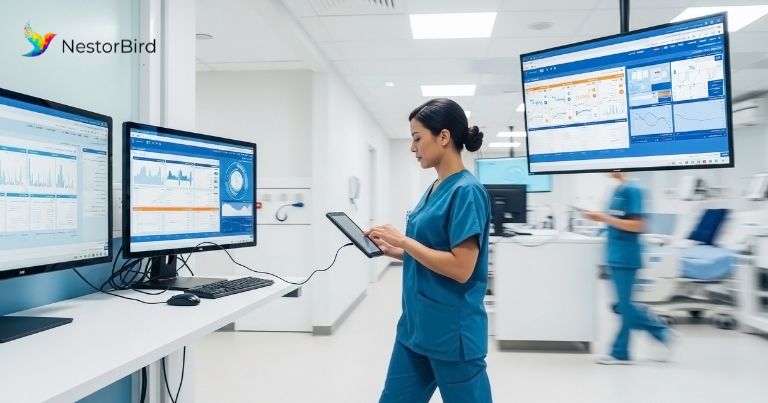
ERP Software for Healthcare: Driving Operational Excellence and Better Patient Outcomes
The healthcare industry is under constant pressure to enhance patient care while managing costs and improving operational efficiency. As hospitals, clinics, and medical practices face growing challenges in an increasingly digital world, Healthcare ERP has emerged as a vital tool for streamlining operations, improving decision-making, and ensuring regulatory compliance.
In this post, we’ll discuss how ERP Software for Healthcare is transforming healthcare organizations, the features that make it indispensable, and how its implementation leads to significant improvements in both operations and patient care.
What is ERP Software in Healthcare?
Enterprise Resource Planning (ERP) software integrates a variety of functions within an organization into one unified system. In healthcare, ERP systems connect different departments such as finance, inventory, human resources, patient management, and regulatory compliance. These systems automate and streamline processes, improve data accessibility, and allow for more informed decision-making.
By consolidating multiple functions into a single platform, ERP solutions reduce manual work, eliminate errors, and provide healthcare providers with the tools they need to deliver better, more efficient care.
Core Features of ERP Software for Healthcare
ERP Software for Healthcare is designed with features that address the unique needs of healthcare providers. Here are some of the essential features of healthcare-focused ERP systems:
Patient Information Management
ERP Healthcare systems centralize patient data, enabling healthcare professionals to easily access up-to-date medical records, diagnoses, treatments, and appointment history. This unified approach ensures that the right information is available at the right time, improving care delivery and reducing the chances of errors.
Financial and Billing Integration
Healthcare billing is often complex, involving insurance claims, reimbursement cycles, and varying payment structures. ERP Healthcare systems simplify this process by automating billing cycles, integrating insurance claims, and offering real-time financial reporting. This reduces billing errors, accelerates payment cycles, and ensures greater financial transparency.
Inventory and Supply Chain Management
Managing medical supplies, pharmaceuticals, and equipment is a significant challenge in healthcare. ERP Software for Healthcare tracks inventory levels, automates ordering, and manages stock across multiple locations. This ensures that healthcare providers never run out of critical supplies while minimizing waste and reducing costs.
Human Resources and Staff Management
Scheduling, payroll, performance management, and compliance with labor laws are all made easier with ERP Software for Healthcare. By automating these tasks, healthcare organizations can ensure that they have the right staff available when needed, improve workforce management, and enhance employee satisfaction.
Compliance and Regulatory Reporting
Healthcare organizations are subject to a variety of regulations, including HIPAA compliance, OSHA, and other local and international standards. ERP Healthcare systems assist in meeting these compliance requirements by automating reporting, ensuring data privacy, and keeping an audit trail of all activities related to patient care and organizational processes.
Analytics and Reporting
ERP Software for Healthcare provides powerful tools for data analysis and reporting, allowing healthcare organizations to track performance metrics across departments. From patient outcomes and financial performance to staff efficiency, the ability to analyze data in real-time empowers organizations to make informed, strategic decisions.
How ERP Software Benefits Healthcare Organizations
Adopting ERP Healthcare Software offers healthcare organizations a wide range of benefits, from reducing operational costs to improving patient satisfaction. Here's a closer look at some of the key advantages:
1. Improved Efficiency and Productivity
ERP Software for Healthcare systems automate many administrative tasks that traditionally required significant manual input. By streamlining processes such as patient scheduling, billing, and supply ordering, healthcare providers can significantly improve efficiency. This allows staff to focus more on patient care and less on administrative work, enhancing overall productivity.
2. Enhanced Patient Care
With a centralized patient record system, healthcare professionals have immediate access to comprehensive patient histories. This leads to more informed diagnoses, better care coordination, and reduced chances of medical errors. Additionally, ERP Healthcare systems can help identify potential health risks or complications earlier, enabling proactive care.
3. Cost Control and Financial Optimization
Effective financial management is crucial for healthcare organizations to remain profitable and sustainable. ERP Software for Healthcare helps track expenses, optimize billing processes, and improve cash flow by reducing errors in the billing and claims process. Additionally, real-time financial data allows healthcare leaders to identify cost-saving opportunities, such as reducing waste in inventory or improving staff utilization.
4. Regulatory Compliance and Risk Management
With the healthcare industry facing an ever-changing landscape of regulatory requirements, Best ERP Healthcare Software Solutions play a vital role in helping organizations maintain compliance. By automatically generating reports, tracking data privacy, and ensuring all practices adhere to current laws, ERP systems minimize the risk of costly fines or legal action.
5. Improved Decision-Making
The real-time data and insights provided by ERP Healthcare Software allow healthcare leaders to make better-informed decisions. Whether it’s optimizing resource allocation, improving patient scheduling, or forecasting future demand, data-driven decision-making helps healthcare providers remain agile and responsive in a rapidly changing environment.
6. Better Collaboration and Communication
With an ERP system in place, all departments—from finance to human resources to patient care—can access and share data through a single, unified platform. This promotes better communication and coordination between departments, ensuring that everyone is working from the same set of accurate, up-to-date information.
Challenges in Implementing ERP Software
While the benefits of ERP Software for Healthcare are clear, there are also challenges that healthcare organizations must address during implementation:
Initial Setup and Costs: The initial cost of an ERP system can be significant. This includes software licensing, customization, training, and integration with existing systems. However, many organizations find that the long-term benefits, including cost savings and improved efficiency, outweigh the initial investment.
System Integration: Healthcare organizations often have legacy systems in place that may not be easily integrated with new ERP solutions. Transitioning from older systems to a new ERP platform can be complex and may require technical expertise and careful planning to ensure a smooth integration.
Training and Adoption: Implementing an ERP system requires comprehensive training for staff to ensure that they can use the system effectively. Resistance to change can be another obstacle, so strong leadership and a change management strategy are essential to encourage adoption.
Conclusion: The Future of Healthcare Management with ERP Software
As the healthcare industry continues to evolve, the role of technology in improving operational efficiency and patient care becomes increasingly important. Best ERP Healthcare Software Solutions offer a powerful solution for healthcare organizations looking to streamline their operations, ensure regulatory compliance, and enhance patient outcomes.
By centralizing key functions like patient management, financial tracking, and supply chain management, ERP systems create a more cohesive and efficient healthcare environment. While the initial investment may be significant, the long-term benefits—such as improved productivity, reduced costs, and enhanced patient care—make ERP Software for Healthcare a valuable tool for any healthcare organization.
For healthcare providers aiming to remain competitive in a fast-paced and ever-changing industry, ERP Healthcare is no longer just a luxury—it’s a necessity.





0 Comments